Navigating the Aviation Capital Markets amid Geopolitical Uncertainty

Valuation Outlook

October 14, 2026

Navigating the Aviation Capital Markets Amid Geopolitical Uncertainty

The commercial aviation industry, facing rising fuel costs, increased lessee default risk and GDP growth uncertainty, has been vulnerable to oil price swings associated with the Middle East conflict. While this low-margin industry could have endured a difficult year, it has instead seen continued upward growth driven by robust and sustained air passenger demand and an increasingly efficient capital markets environment.

Airlines have historically relied on a model of passing rising costs onto the consumer; ticket prices have increased 10% to 20% compared to last year, according to the Financial Times. Studies published by the International Air Transport Association (IATA) have demonstrated that historically consumer spending on commercial air travel is closely linked to GDP growth, a core indicator of macro-economic health that can effectively offset the impact of price increases.

Iran War Challenges

The current global GDP growth rate of 2.27%, although down by 0.4 percentage points year-to-date (YTD), is still buoying a growing economy that relies on global travel.

A prolonged war and sustained levels of high airline operating costs increase the chances of cracks forming in the resilience that the aviation industry has enjoyed for decades. As of September, S&P Global Energy’s base case no longer assumes a return to prewar levels of Middle Eastern crude oil production by the end of 2027. Crude oil price projections have increased to $89 and $86 a barrel at the end of 2026 and 2027, respectively, from about $70 pre-war.

With airlines, and by extension lessors, heavily exposed to the fallout of sharply-increasing oil prices, sustained pressure would likely have a compounding effect across the industry. Still, airline risk is not uniform. Full-service carriers, many of which employ systematic fuel cost hedging programs, have defrayed financial uncertainty to the capital markets, at least in the short term. For all carriers entering into hedging programs, we expect the cost of this risk mitigation strategy to increase as long as fuel costs and underlying commodity prices remain high and volatile.

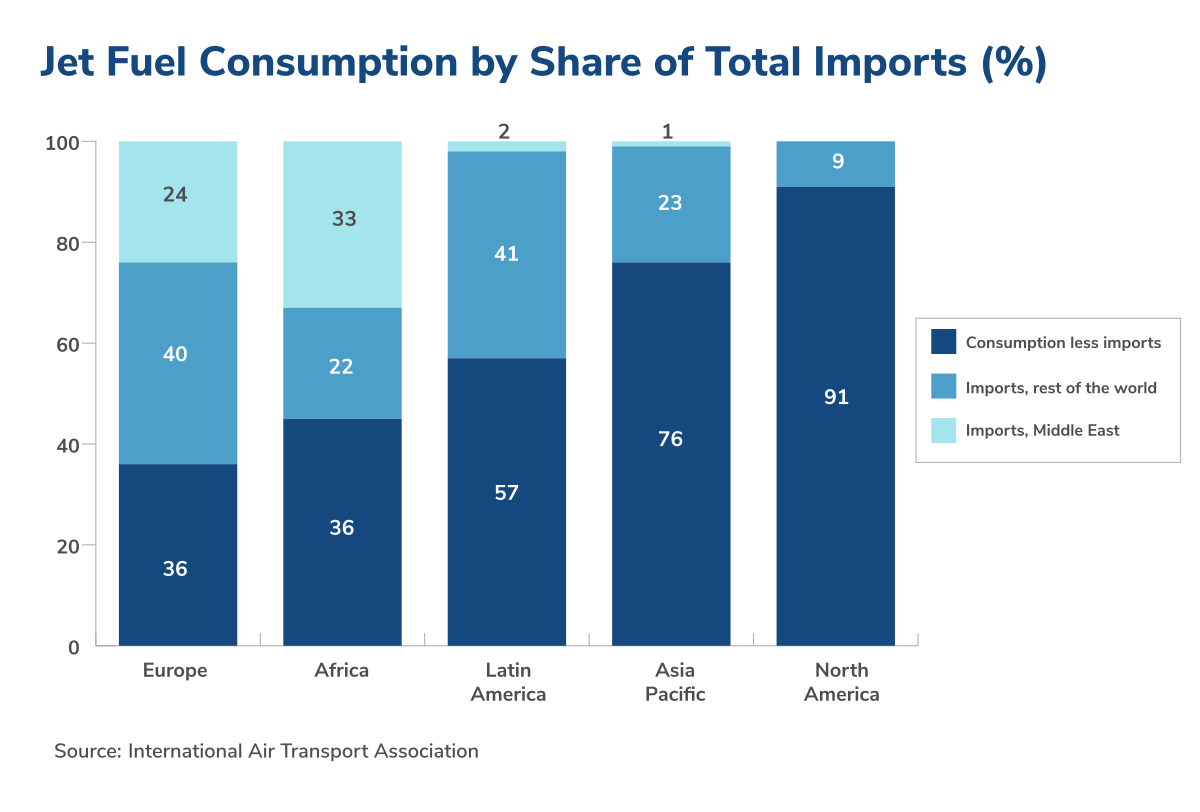
Differences in regional jet fuel prices and relative currency strengths lead to variance in the severity of global shocks across geographies, as illustrated by IATA. So too does countries’ reliance on the Strait of Hormuz; prior to its closure, Europe and Africa imported 24% and 33% of their jet fuel, respectively, from the Persian Gulf. Both continents import over half of their total jet fuel consumption.

Navigating the Aviation Capital Markets amid Geopolitical Uncertainty

Financing Aviation Leasing in the Capital Markets

Air carriers increasingly seek to diffuse operating costs over multi-year periods and have, as such, driven the leased portion of the global fleet above 50%. This historical and growing trend of preference for capital efficiency has enabled airlines to lighten balance sheets, while continuing to meet passenger capacity demands.

Global asset managers, such as private equity firms, special situations funds, and institutionally capitalized leasing joint ventures, are well positioned to continue to fuel the growth engine that the commercial aviation industry demands. Asset diversification across geography, size and lessee credit quality enables the deployment of large pools of capital in risk-mitigated structures that are designed to better withstand operating shocks.

However, the maturing of aircraft leasing and lending as a mainstream financial product has introduced new challenges for investor financial reporting. Where airlines report aggregate asset values in their financial statements, often supported by aircraft appraisals, investment funds have an obligation to report investment Fair Values to their Limited Partners and regulators.

Determination of the Fair Value of an aviation investment incorporates the appraised value of the aircraft but also considers the current market-required levels of return for comparable traches of risk as of a valuation date. Similar to other fixed income investments—aircraft lease investments have been referred to by the asset management community as “flying bonds”—the valuation of a lease investment for fund financial reporting considers potential migration in the credit risk of the lessee, the current and projected market for similar asset types, and the implied yields of recent comparable financing transactions.

In an environment of heightened macroeconomic and industry-specific uncertainty, investors and regulators are requiring increased depth and frequency of investment valuations from aviation funds and lessors, with the aim of ensuring that even illiquid portfolios are reliably marked to market in a timely manner. Kroll has established itself as the leading aviation investment independent valuation partner, providing valuations of more than 2,100 aircraft leasing and lending investments on a quarterly basis.

Predictive Market Indicators

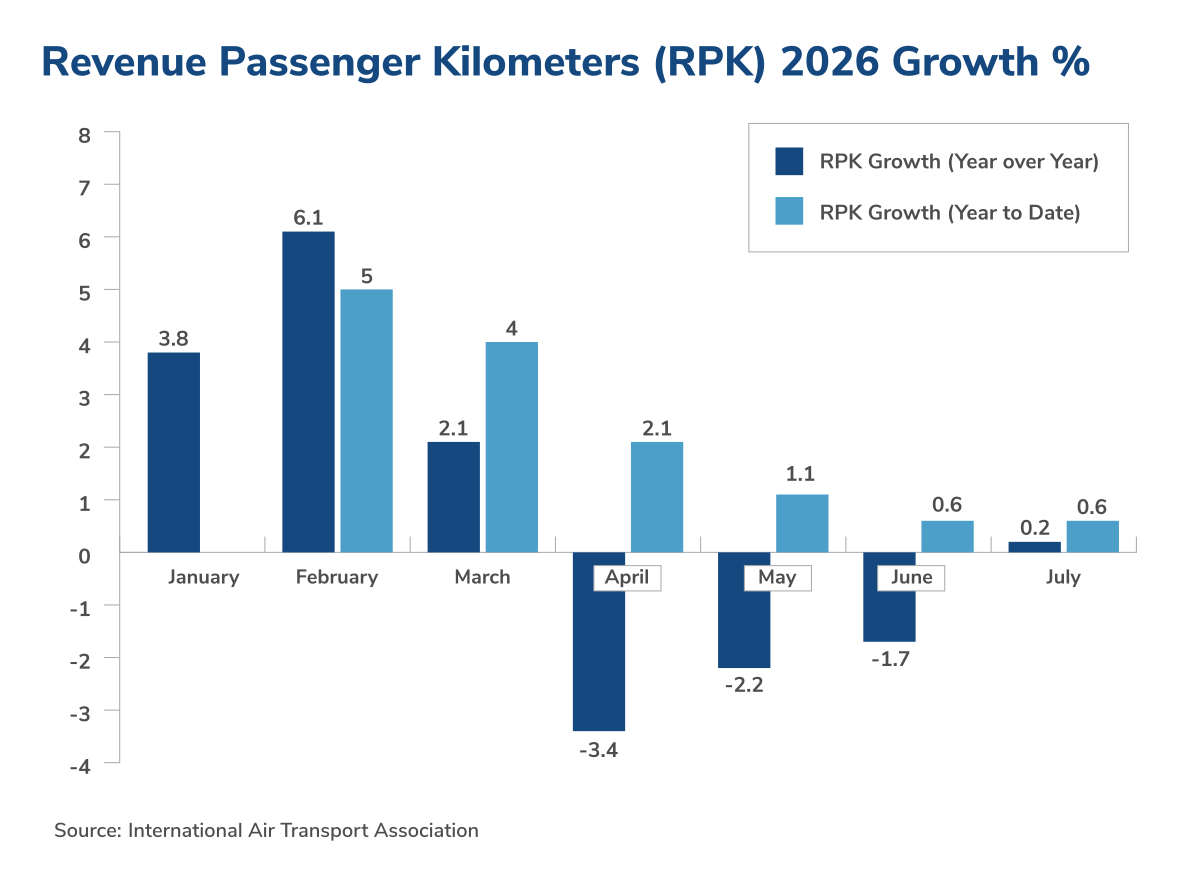
Revenue passengers kilometers, or, (RPK), which tracks the available supply of passenger revenue and serves as a projection of future demand, has demonstrated industry resilience in 2026, growing by 0.6% YTD, according to IATA.

Navigating the Aviation Capital Markets amid Geopolitical Uncertainty

Projected GDP growth remains resilient, with S&P estimating that forecasted 2.5% global growth in 2026 will increase to 2.9% at the end of 2027.

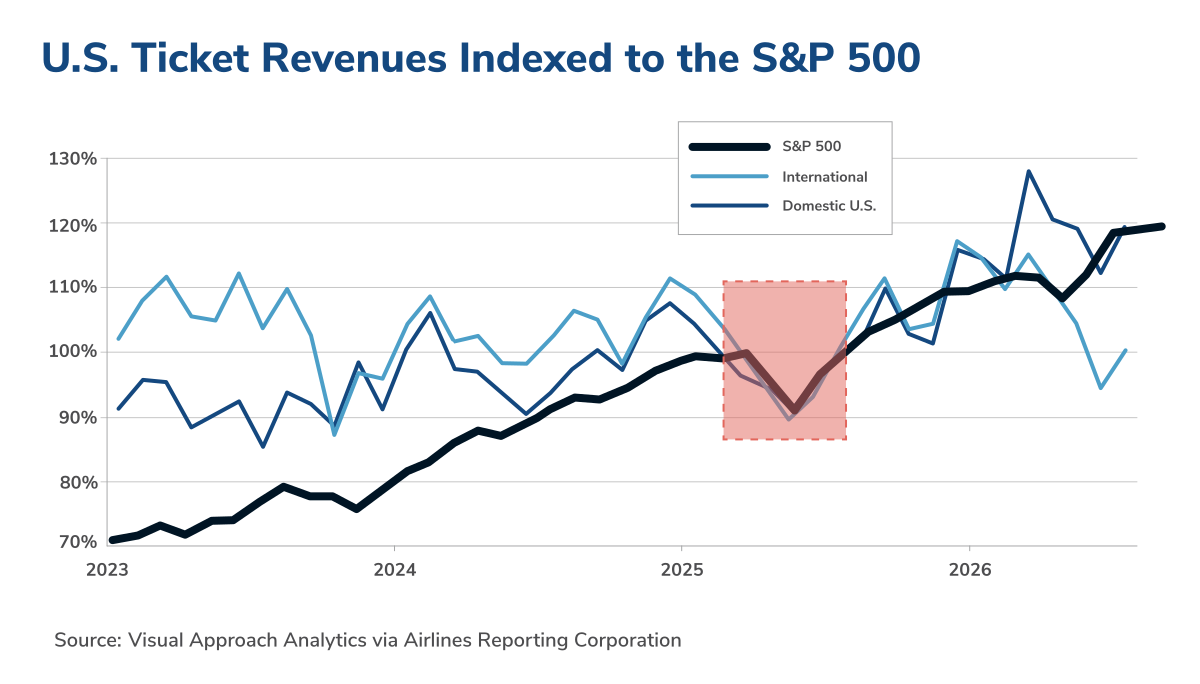
Also telling is the extent to which U.S. airline revenues have mirrored trends in the S&P 500. Trendlines between the two have evidenced that passengers’ economic prosperity (or lack thereof) in the broader market could provide a reasonable benchmark for predicting airline revenue trends.

Airline revenues have dipped in alignment with S&P 500 lulls but have also consistently demonstrated yearly growth. When the current administration’s sweeping tariffs sent the market into a sharp downturn in April 2025, RPKs and the S&P 500 nearly directly mirrored each other’s drop and subsequent rebound later in the year.

Navigating the Aviation Capital Markets amid Geopolitical Uncertainty

This can be rationalized that consumers’ spending power on travel fluctuates at least partly in line with market swings. Airlines’ resilience appears correlated to the stock market, as short-term economic downturns can recover through sustained long-term economic growth, positioning the industry attractively for asset managers.

Valuation and Due Diligence Procedures

Given the complex, time-consuming process of acquiring and leasing commercial aircraft, there are several prudent checkpoints lessors must pass throughout the acquisition and delivery process. In addition to the frequent valuation of aviation portfolios, capital markets investors perform transaction financial diligence at the point of aircraft acquisition to ensure compliance with fund mandates. Particularly with larger portfolio acquisitions, financial investors’ boards may require a fairness opinion in connection with the transaction, necessitating the involvement of an independent third-party financial advisor.

Kroll partners with aviation investors to provide the full spectrum of aviation capital markets advisory services, including valuation, due diligence and transaction opinions.

Stay Ahead with Kroll

Financial Instruments and Technology

The Kroll Financial Instruments and Technology practice is a leading solutions provider for asset managers, hedge funds, fund administrators, banks, insurers, private equity firms, commodity trading and investment firms, and corporations.

Valuation Services

When companies require an objective and independent assessment of value, they look to Kroll.

Kroll Economics

Turning volatility into clarity—with strategic, data-driven insight you can trust.

Transaction Opinions

Our Transaction Opinions solutions span fairness opinions, solvency opinions, ESOP/ERISA advisory, board and special committee advisory, and complex valuations.