
Investing in the Big Apple: Unlocking NYC’s Real Estate Tax Incentives

Property Tax

November 14, 2025

Investing in the Big Apple: Unlocking NYC’s Real Estate Tax Incentives

New York City (NYC) is one of the most dynamic real estate markets in the world. In NYC, as well as in other major cities across the U.S., the Covid-19 pandemic reduced the demand for office space and increased the urgency for new housing. Real estate owners and developers evaluating major capital projects in this environment must understand how a suite of state and city incentives can change the economics of development, renovation, and conversion. These programs, ranging from property tax abatements to sales tax exemptions and employment credits, are not just supplementary—they are often the difference between a viable project and one that struggles to make financial sense.

This report presents an overview of select NYC tax incentive programs, integrated with charts and case examples that illustrate their potential impact. The goal is to provide owners and developers with both the strategic insight and the practical verification needed to act with confidence.


Conversions: Office to Residential (AHCC – RPTL §467-m)

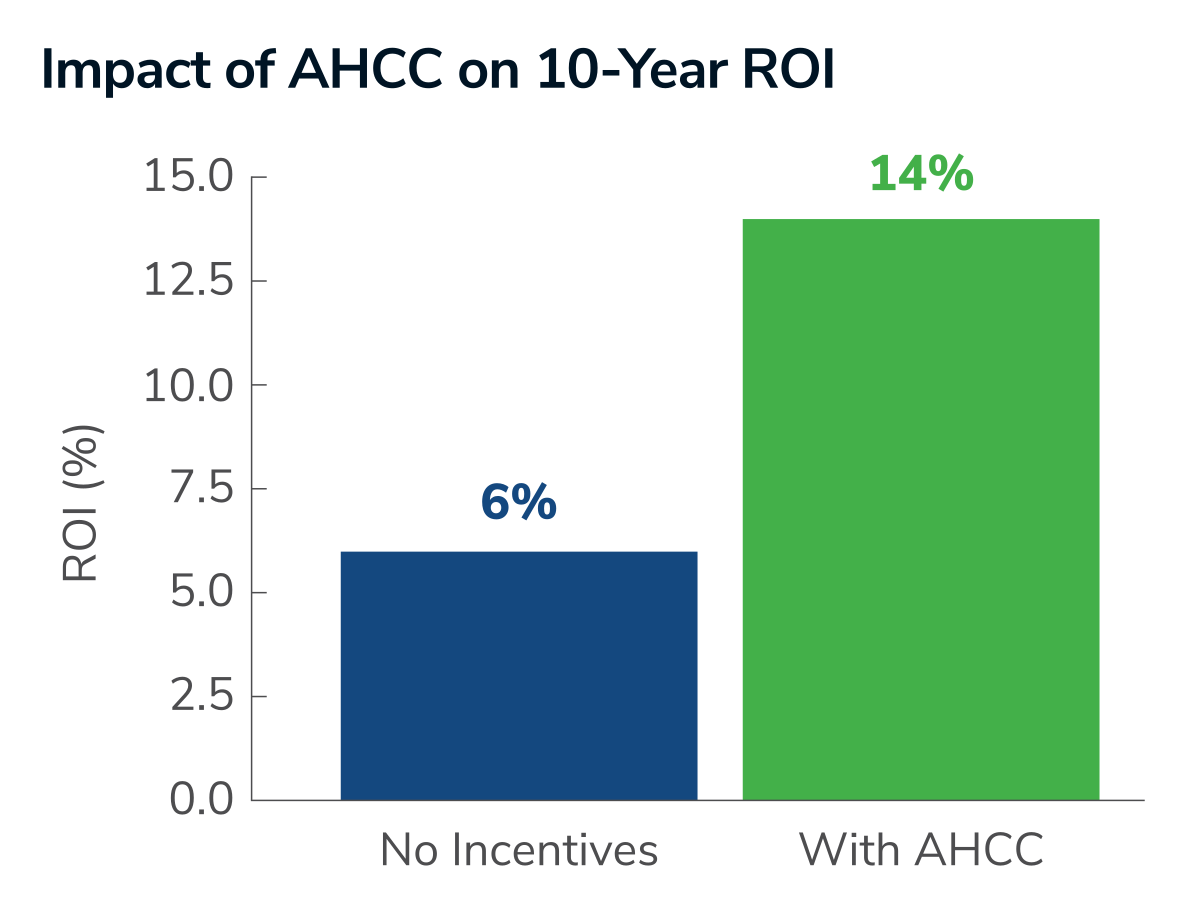
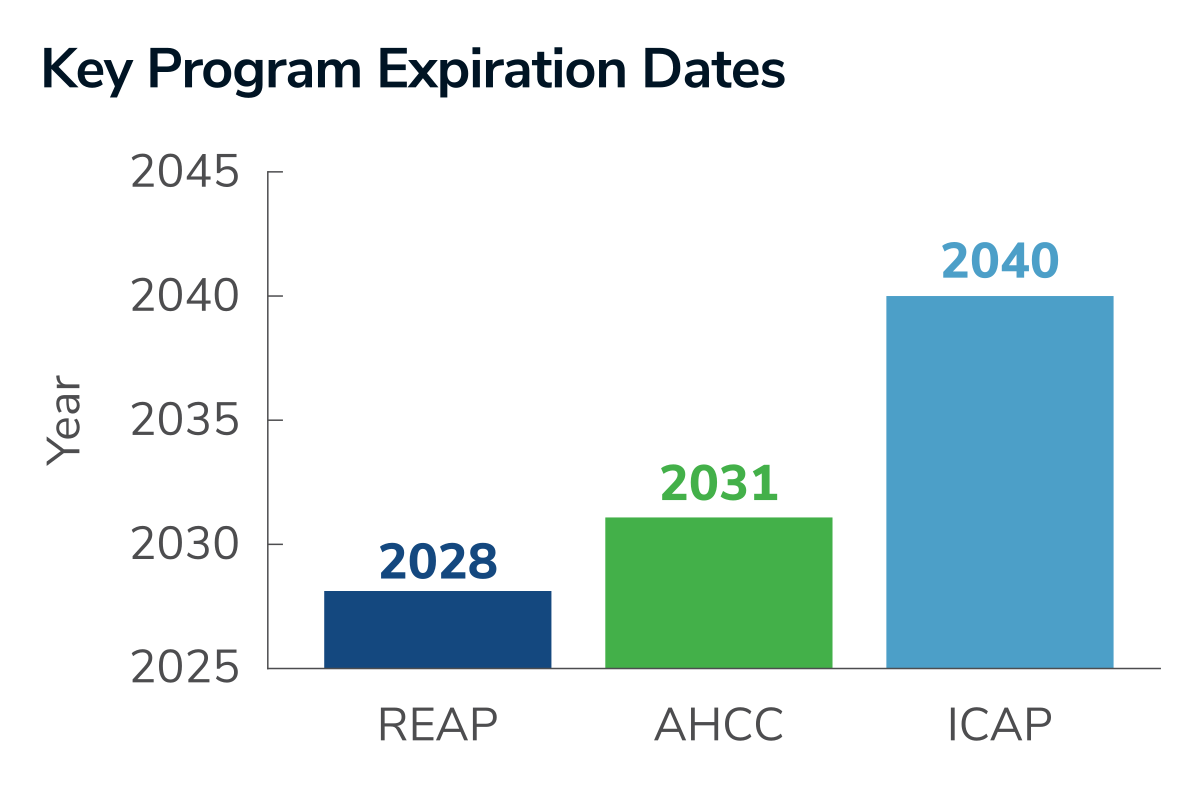
One of the most significant programs addressing office oversupply is the Affordable Housing from Commercial Conversions (AHCC) program. This recent initiative provides property tax exemptions as high as 90% for up to 35 years for eligible office-to-residential conversions. The benefits are heavily front-loaded, rewarding early years of operation, but eligibility is tightly bound to project timing: projects must have begun after December 31, 2022, and be completed before June 20, 2031. In return, owners must commit to affordability requirements and rent stabilization, which can affect long-term valuations.
Investing in the Big Apple: Unlocking NYC’s Real Estate Tax Incentives


Modernization: M-CORE and ICAP

For properties that are not strong candidates for residential conversion, New York City NYC offers two programs focused on modernization. The Manhattan Commercial Revitalization (M-CORE) program supports transformative office renovations south of 59th Street with up to 20 years of property tax relief, a sales tax waiver, and a reduced mortgage recording tax. Meanwhile, the Industrial & Commercial Abatement Program (ICAP) offers abatements lasting up to 25 years citywide, subject to carve-outs in prime Manhattan corridors. Together, these programs encourage owners to reposition aging office stock into competitive assets with significantly reduced carrying costs.


Relocation and Employment Assistance Program (REAP)

Companies investing in renovated mixed-use properties in NYC and who also meet certain eligibility criteria should consider the Relocation and Employment Assistance Program (REAP), which directly supports job creation in specific areas. It provides a tax credit of $3,000 per employee per year for up to 12 years against NYC business taxes – specifically, the general corporation tax, banking corporation tax, business corporation tax, unincorporated business tax, or utility tax. The program is particularly attractive for companies relocating from outside NYC or below 96th Street into the outer boroughs or Upper Manhattan.
Investing in the Big Apple: Unlocking NYC’s Real Estate Tax Incentives

Sustainability and ESG Incentives

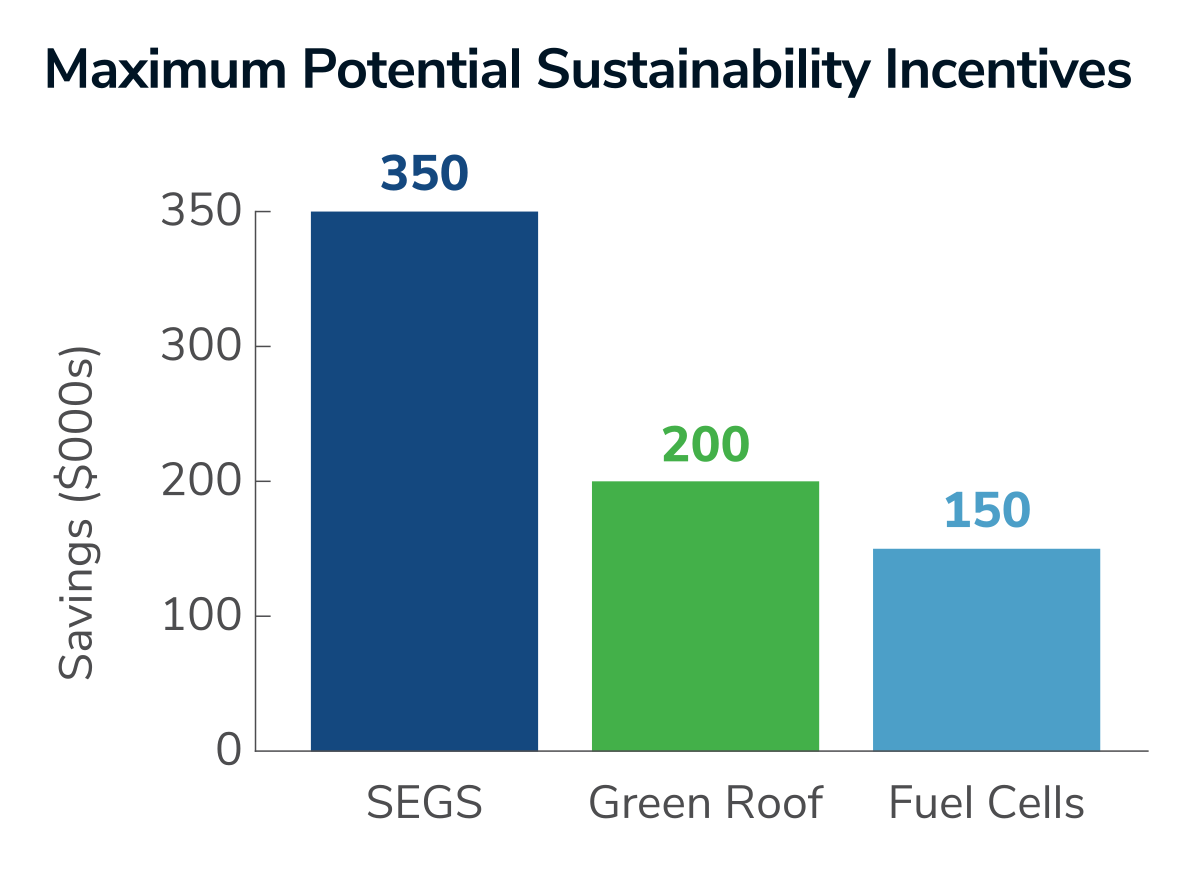
NYC also rewards environmentally conscious construction. The Solar Electric Generating System Abatement (SEGS) provides up to $350,000 in property tax abatements. Green Roof incentives provide $10–$15 per square foot in abatements, capped at $200,000. Additionally, state and MCTD level sales tax exemptions apply to commercial solar, hydrogen, and fuel cell systems. These programs not only reduce upfront and operating costs but also enhance tenant demand and financing attractiveness in ESG-focused capital markets.
Investing in the Big Apple: Unlocking NYC’s Real Estate Tax Incentives

Sales and Use Tax Incentives

NYC allows a 100% exemption from sales tax on purchases of materials by contractors who use those materials to make capital improvements to real property – specifically, making permanent changes that substantially add to the value of the real property or appreciably prolongs its useful life. Note that NYC has very strict policies on what qualifies as an improvement. Be especially careful when determining whether a cost is an improvement or an expense. Misclassifying expenses as improvements is a common issue discovered under audit.

Program Stacking Opportunities

Not all NYC tax incentive programs can be layered together, but in many cases owners and tenants can combine abatements and credits to maximize savings. The stacking matrix below illustrates common pairings. For example, ICAP can be combined with REAP, CEP, or CRT reductions, while AHCC generally stands alone.
NYC Incentives Stacking Matrix (Including Sales Tax Incentives)

Program

Stackable With

ICAP

REAP, CEP, CRT Reduction, Sales Tax Incentives

REAP

ICAP, CEP, Sales Tax Incentives

CEP

ICAP, REAP, Sales Tax Incentives

CRT Reduction

ICAP, CEP, Sales Tax Incentives

M-CORE

Some CRT programs, Sales Tax Incentives

AHCC

Generally stand-alone

Sales Tax Incentives

ICAP, REAP, CEP, CRT Reduction, M-CORE

Other Key Considerations


Property Tax

Property owners should be aware that commercial buildings in the course of construction should generally be assessed as vacant land for upwards of three years after commencement of construction. Removal of the building portion of the tax assessment will depend on several relevant factors including the timing of demolition, property type, and estimated date of completion. Also, the improvement exemption period may vary or include an exemption of the land value depending on the specific rules of any incentive in place.

Insurance

Owners converting older office stock under § 467-m should look into insuring the legacy structure at Actual Cash Value (ACV) while the conversion work is underway. The intent is to establish a cash payout that more closely reflects what the owner could reasonably expect to realize if the property was sold on the open market in its current condition. For aging assets targeted for redevelopment, ACV often aligns better with real-world intentions, ensuring some risk transfer while avoiding over-insurance.

Cost Segregation

Developers pursuing office-to-residential conversions should commission a cost segregation study, in which building components are identified and reclassified according to their useful life. This allows the assets to be depreciated much more quickly than if they were written off with the building as a whole. When paired with federal tools like the 45L credit for energy-efficiency upgrades, cost segregation can free up much needed cash flow.

Federal and State Income Tax

When investing in NYC real estate, it is important to evaluate the full range of federal and state income tax implications that may impact investors and developers. Various federal, state and local tax credits can further enhance after-tax returns. Beyond credits and incentives, concepts such as IRC Section 1031 like-kind exchanges and investments in Opportunity Zones allow investors to defer or reduce capital gains taxes when executed under qualified transactions and programs. Given the complexity and variation of these programs by jurisdiction, investors should conduct a detailed compliance review and long-term tax impact analysis before committing capital.


Beyond NYC

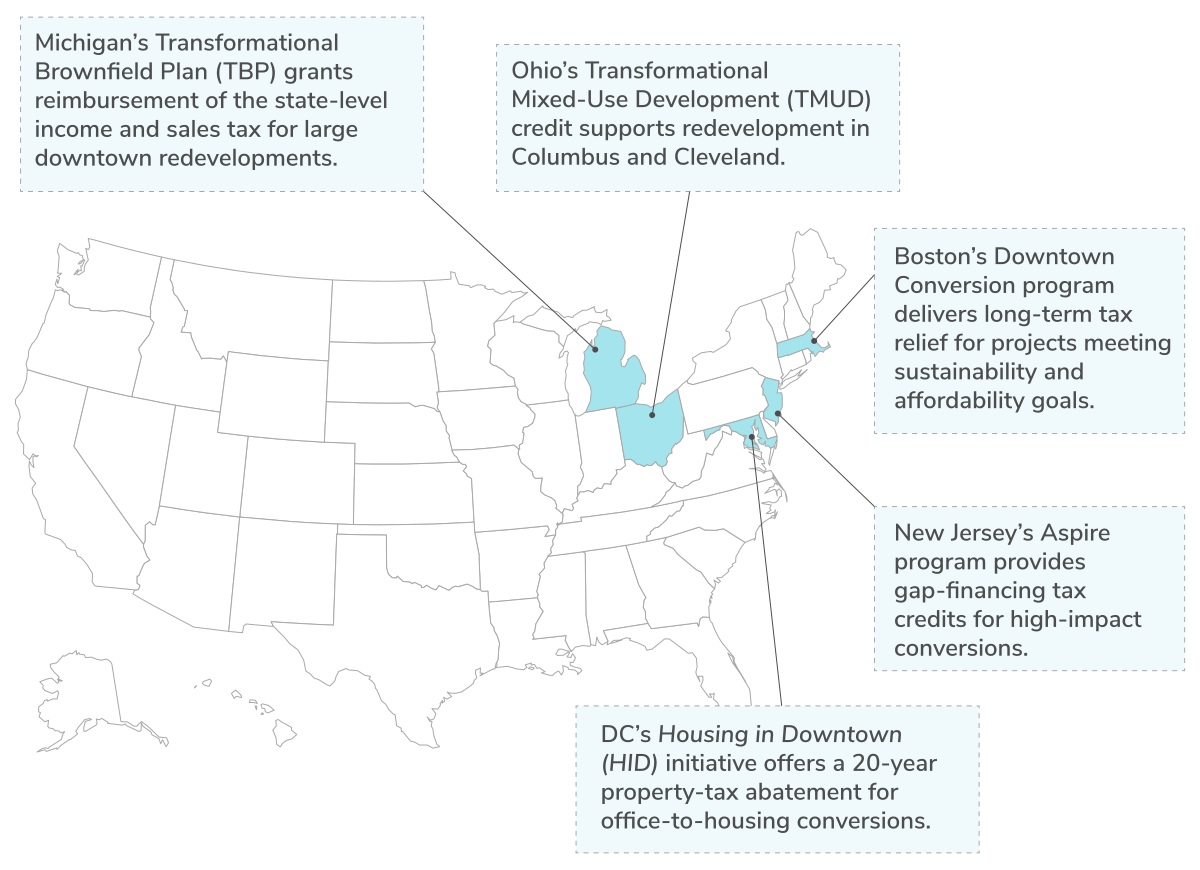
Other markets are also encouraging office-to-residential conversions:

Investing in the Big Apple: Unlocking NYC’s Real Estate Tax Incentives

Together, these programs point to a broader national trend: cities are actively using incentive policy to transform obsolete office stock into new residential and mixed-use demand. Stay tuned as our team tracks how these programs and policies evolve—and where advisory involvement can unlock their full value for developers and investors.


Conclusion

For real property owners and developers, NYC’s incentive landscape is both an opportunity and a challenge. Programs such as AHCC, M-CORE, ICAP, and REAP can reduce liabilities by double-digit percentages, while sustainability incentives enhance both compliance and asset value. However, strict eligibility requirements, program expirations, and compliance obligations mean early planning is critical.

Kroll’s integrated advisory services, including tax, real estate, and fixed asset management & insurance solutions, provide the expertise and relationships needed to maximize these benefits while minimizing risks. With the right approach, incentives can move projects from marginal to transformational. Kroll is well positioned to assist you throughout the entire process.

Stay Ahead with Kroll

Tax Services

Built upon the foundation of its renowned valuation business, Kroll's Tax Service practice follows a detailed and responsive approach to capturing value for clients.

Property Tax Services

Kroll engages with companies nationwide to provide independent, innovative and results-driven property tax services.

Income Tax Advisory

Kroll engages with companies nationwide to provide independent, innovative and results-driven income tax advisory services.

Sales and Use Tax Services

Kroll provides a comprehensive suite of sales and use tax services to assist companies in complying with its sales and use tax obligations.

Site Selection and Incentives Advisory

Kroll has a proven track record of assisting companies with location strategies in the U.S. and around the globe.