

Fixed Asset Advisory Services
June 30, 2026
Measuring the Return on Resilience: Turning Risk Reduction into Asset Value
A Portfolio Framework for Insurability, Cash Flow Stability, and Long‑Term Asset Performance
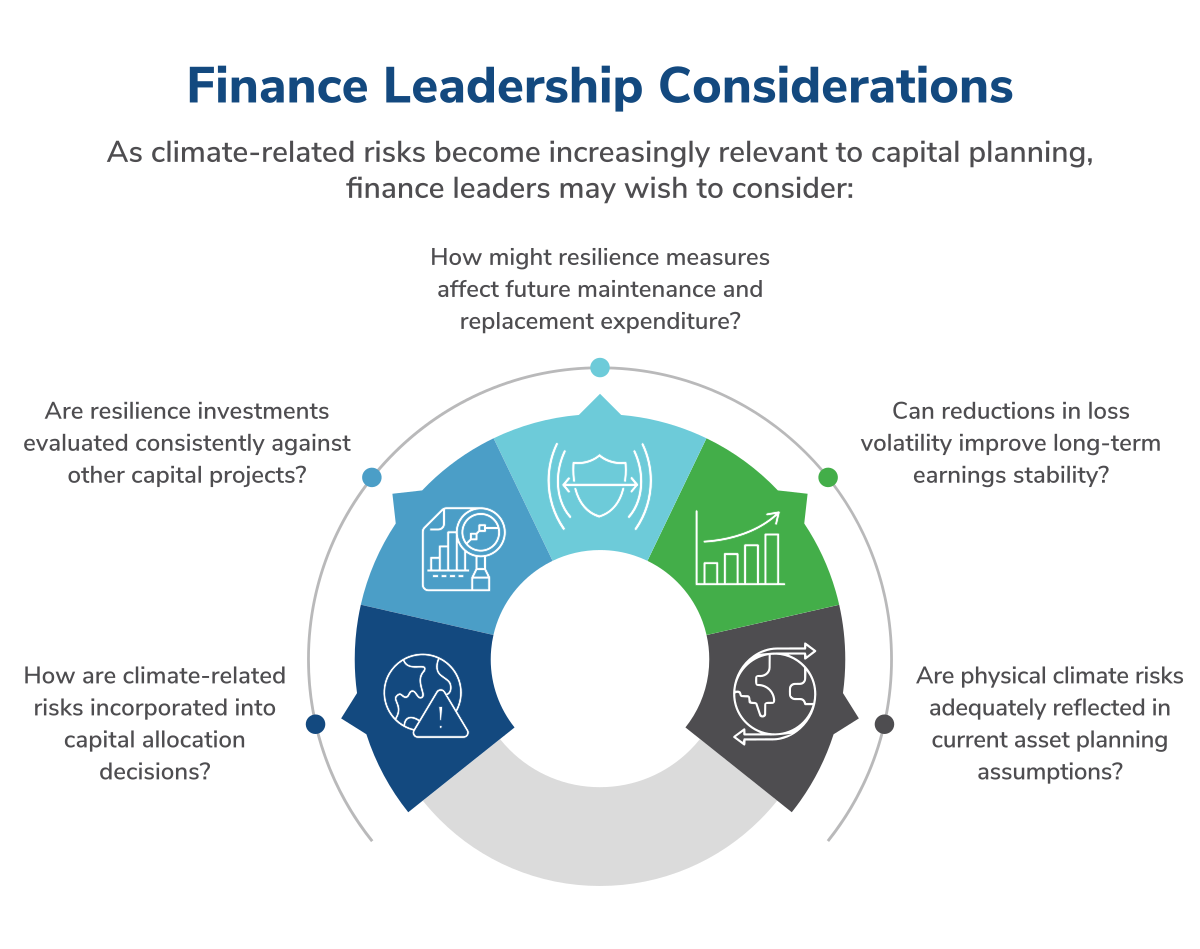
Climate-related risk is now part of everyday financial decision-making. Insurers are repricing portfolios, lenders are stress-testing assets, and investors are scrutinizing physical risk with increasing intensity. For portfolio owners and managers, including both institutional investors and operator-led platforms, resilience has become a capital allocation question. The issue is not whether mitigation matters, but how to evaluate it in financial terms and prioritize actions across a portfolio.
Increasingly, boards, finance teams and investment committees are also being asked to assess whether resilience investments can preserve asset value, improve earnings stability and reduce future capital demands. This requires a framework that extends beyond risk management and supports investment decision-making.
Over the past decade, insured catastrophe losses and climate-related disruption have trended upward in many markets, contributing to tighter underwriting standards and more selective capacity deployment.
Return on Resilience (RoR) provides a structured framework to assess how targeted mitigation affects modeled loss exposure, operational continuity, and insurability, and how those changes can support risk-adjusted views of long-term asset performance. RoR does not predict premiums or guarantee financial outcomes. Instead, it links resilience investments to measurable changes in risk exposure that can inform capital planning and support more informed discussions with brokers and underwriters.
Why a Structured RoR Framework Matters
Resilience is often described in engineering or technical terms. Capital planners, insurers, lenders and investors require something different: a financially grounded and consistent way to compare mitigation options, justify spending, and sequence actions across a portfolio. For finance leaders, the challenge is often not whether a resilience investment is justified, but how it compares against other competing uses of capital. A structured framework supports more consistent evaluation of resilience initiatives alongside operational, growth and maintenance investments.
A structured RoR framework helps decision-makers answer three core questions:
- What capital was deployed, and which specific vulnerability or peril was addressed?
- How did the investment change modeled loss exposure, loss severity, or expected recovery time under defined scenarios?
- How can those changes inform underwriting discussions, capital allocation decisions, and assessments of long-term performance?
These considerations apply across asset classes, particularly where weather-driven losses or operational disruption can affect value, financing conditions, or access to insurance capacity.
The Three Components of Return on Resilience
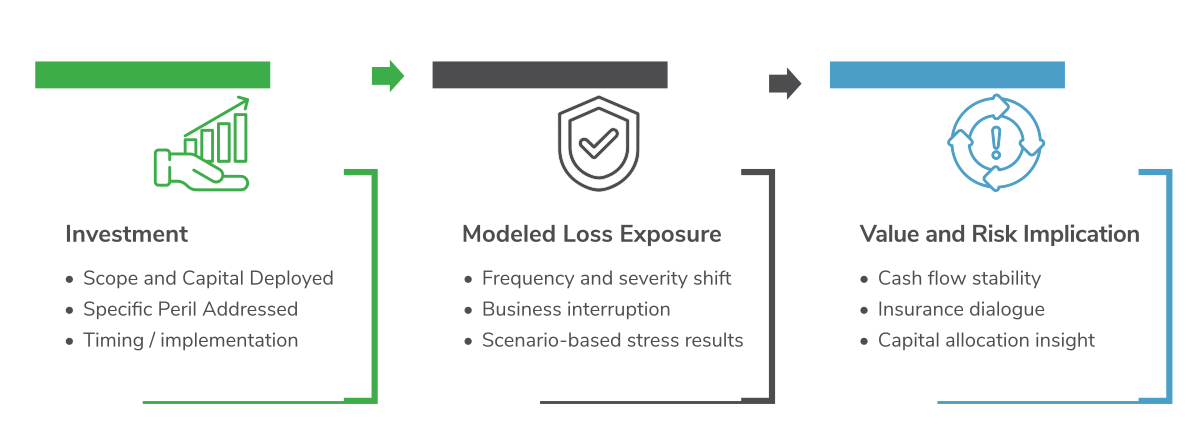
RoR assessments typically address three connected components: (1) Investment, (2) Modeled Loss Exposure and (3) Value Impact.
Together, these elements connect capital deployed to measurable changes in risk exposure and performance outcomes. Each component builds sequentially, starting with disciplined definition of the capital deployed.
1. Investment: Clarity on Capital Deployed
A RoR analysis begins with clear definition of scope, cost, timing, and the specific vulnerability or peril being addressed. Examples may include flood barriers, drainage enhancements, roof or façade strengthening, wildfire mitigation measures, or the relocation and protection of mechanical and electrical systems. For certain asset types, redundancy measures such as backup power or system hardening are central to maintaining operational continuity.
Investment costs are generally observable and quantifiable. When applied consistently across a portfolio, this clarity also enables owners to rank assets by exposure, compare mitigation alternatives, and prioritize capital where risk-adjusted impact may be greatest. Their strategic value becomes clearer when they are explicitly linked to changes in modeled loss exposure, business interruption risk, or expected recovery time under defined scenarios.
2. Modeled Loss Exposure: Quantifying the Change in Risk
Modeled Loss Exposure is often the analytical anchor of a RoR assessment and typically progresses in two stages.
a. Expected Loss and Severity
Catastrophe models, engineering analysis, and, where available, historical claims data can be used to evaluate changes in loss frequency, severity, and volatility before and after mitigation. This analysis may reflect shifts in:
- Projected physical damage
- Estimated business interruption duration
- Tail event severity under defined stress scenarios
The objective is to quantify how specific mitigation measures alter modeled loss behavior in terms that are consistent with how risk engineers, brokers, and underwriters assess exposure.
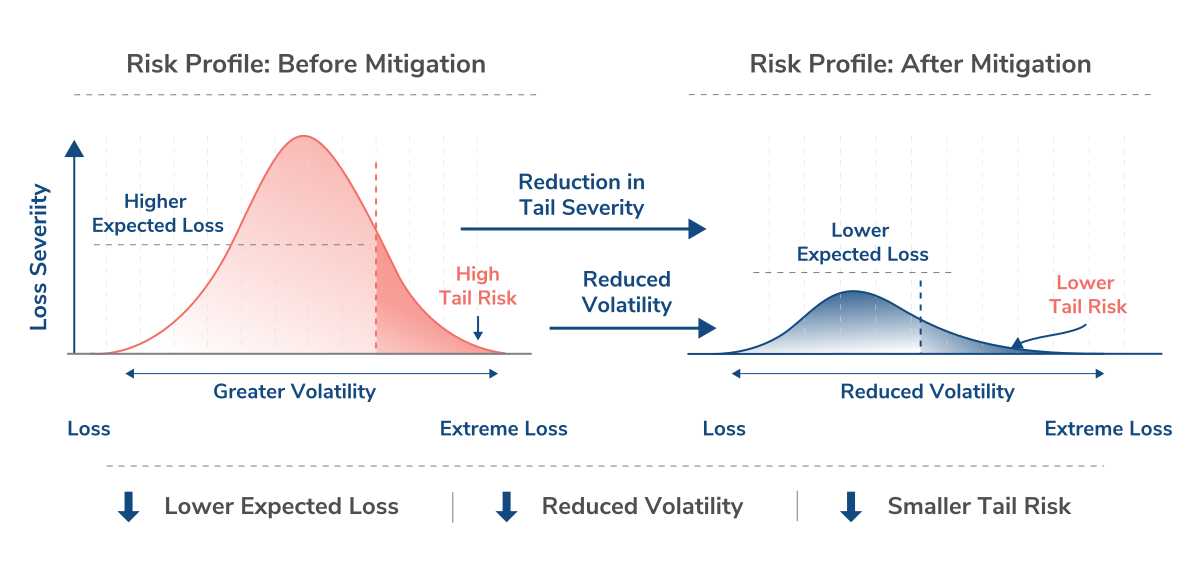
As illustrated in this figure, mitigation narrows the loss distribution and reduces tail severity under defined stress scenarios.
b. Potential Insurance Implications
Where analysis indicates a reduction in modeled loss severity or recovery time, this may support discussions around pricing, terms, deductibles, or available capacity at renewal. Insurance outcomes remain subject to underwriting judgment, market conditions, portfolio context, and carrier risk appetite.
It is important to distinguish between modeled loss improvements and insurance pricing decisions. Modeled results are analytical outputs. Pricing and terms are determined by carriers and typically require broker engagement and underwriting review.
3. Value Impact: Connecting Resilience to Asset Performance
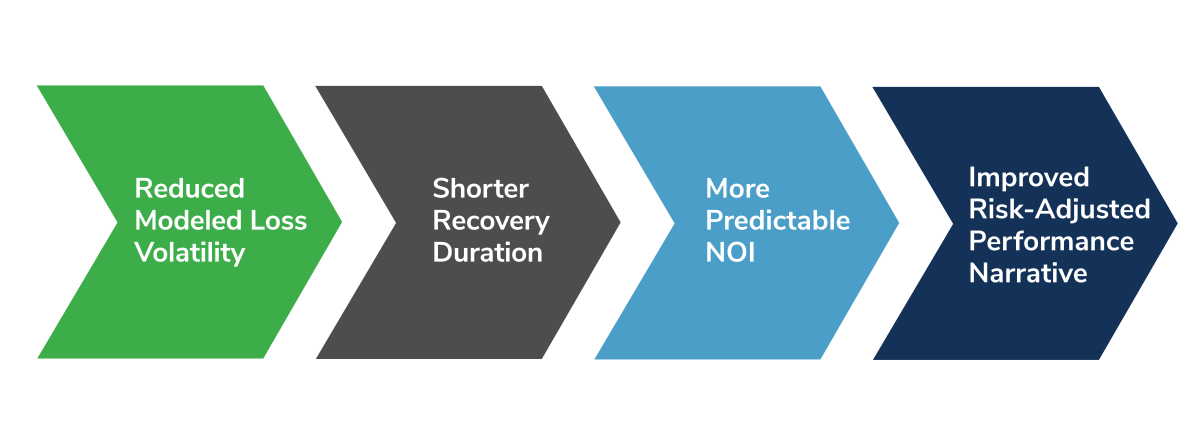
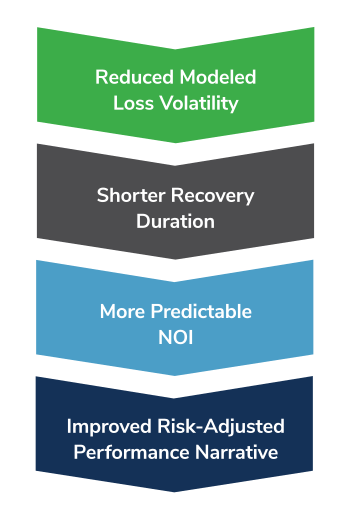
Resilience can influence asset performance through its effect on cash flow stability and downside protection. When modeled loss severity is lower and estimated recovery timelines are shorter, operational outcomes may become more predictable. Greater predictability supports clearer forward-looking planning and risk assessment.
In addition, resilience measures may influence broader asset lifecycle considerations. By reducing exposure to physical damage, operational interruptions and accelerated asset deterioration, resilience investments may contribute to lower maintenance costs, reduced replacement expenditure and improved long-term capital planning outcomes.
For portfolio owners and managers, reduced loss volatility can contribute to more consistent net operating income over time. Stable earnings profiles help clarify how an asset performs under defined stress scenarios and support risk-adjusted performance assessments. This is increasingly relevant for lenders and investors who are incorporating physical risk considerations into credit analysis, valuation assumptions, and portfolio oversight.
Mitigation analysis can also strengthen the quality of dialogue with insurers. While insurance outcomes remain market dependent, the ability to demonstrate lower modeled volatility and improved recovery characteristics may be viewed as an indicator of improved risk quality.
An important parallel development reinforcing this shift is the Royal Institution of Chartered Surveyors’ (RICS) 2026 update to its global valuation standards, which more explicitly integrates ESG and climate risk considerations into commercial property valuation practice. The revised standard requires valuers to assess and, where material, evidence the impact of sustainability factors—including physical climate risks such as flooding, heat exposure, and severe weather—within valuation advice, aligned with the RICS Red Book and International Valuation Standards. This reflects a broader transition from high-level or qualitative treatment toward more structured, evidence-based consideration of how ESG-related risks and costs may influence income durability, capital expenditure expectations, and overall asset risk profile. In this context, Return on Resilience analysis provides a practical bridge between mitigation measures and valuation outcomes, helping translate reductions in modeled loss exposure and improved recovery characteristics into the type of analysis increasingly relevant to valuers, lenders, and investors.
The extent to which resilience influences valuation metrics will vary by asset type, lease structure, market conditions, and data quality. A structured RoR assessment does not determine value, but it provides a disciplined way to evaluate how mitigation may affect the long-term performance and risk profile of an asset or portfolio.
Illustrative Portfolio Example
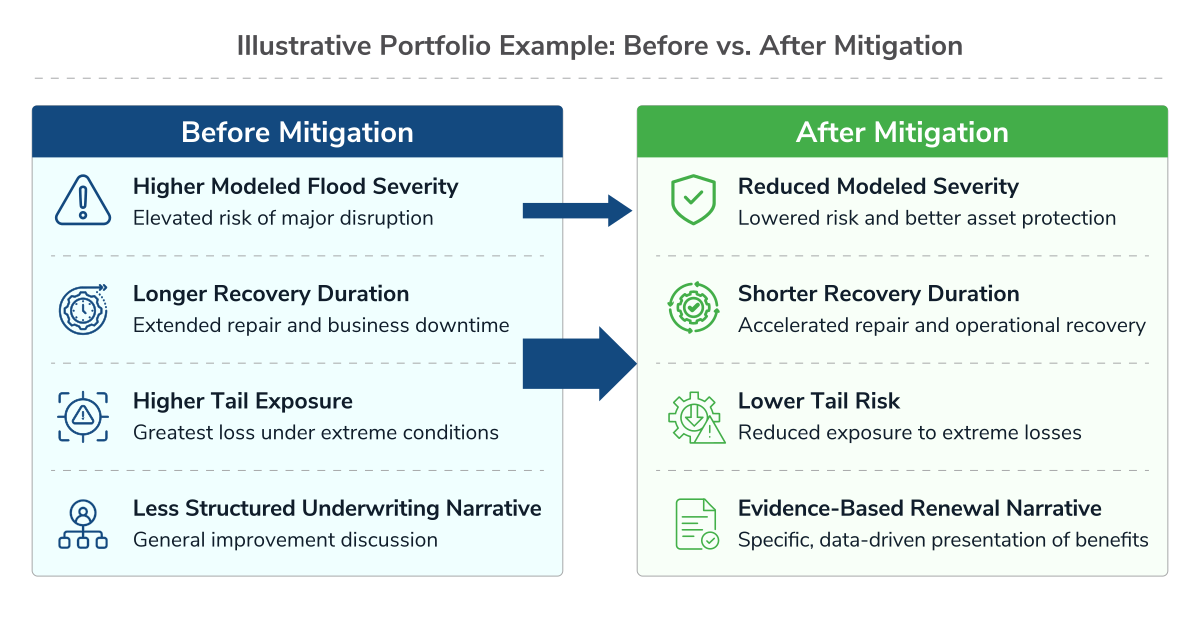
Consider a portfolio exposed to flood and severe convective storm risk. A resilience program includes perimeter defenses, drainage upgrades, and the elevation and protection of critical electrical systems.
Pre- and post-mitigation modeling indicates a reduction in modeled loss severity, improved protection of critical equipment, and shorter estimated recovery periods under defined scenarios. With this analysis, owners and brokers are able to present underwriters with a clear, evidence-based narrative. Rather than referencing general improvements, they can demonstrate how modeled loss characteristics and recovery assumptions have changed.
Even in challenging insurance markets, this supports a more structured and asset-specific dialogue. It also informs internal capital planning by identifying which assets exhibit the highest modeled exposure and where incremental mitigation capital may have the greatest relative impact.
Enhancing Insurability Through Collaboration
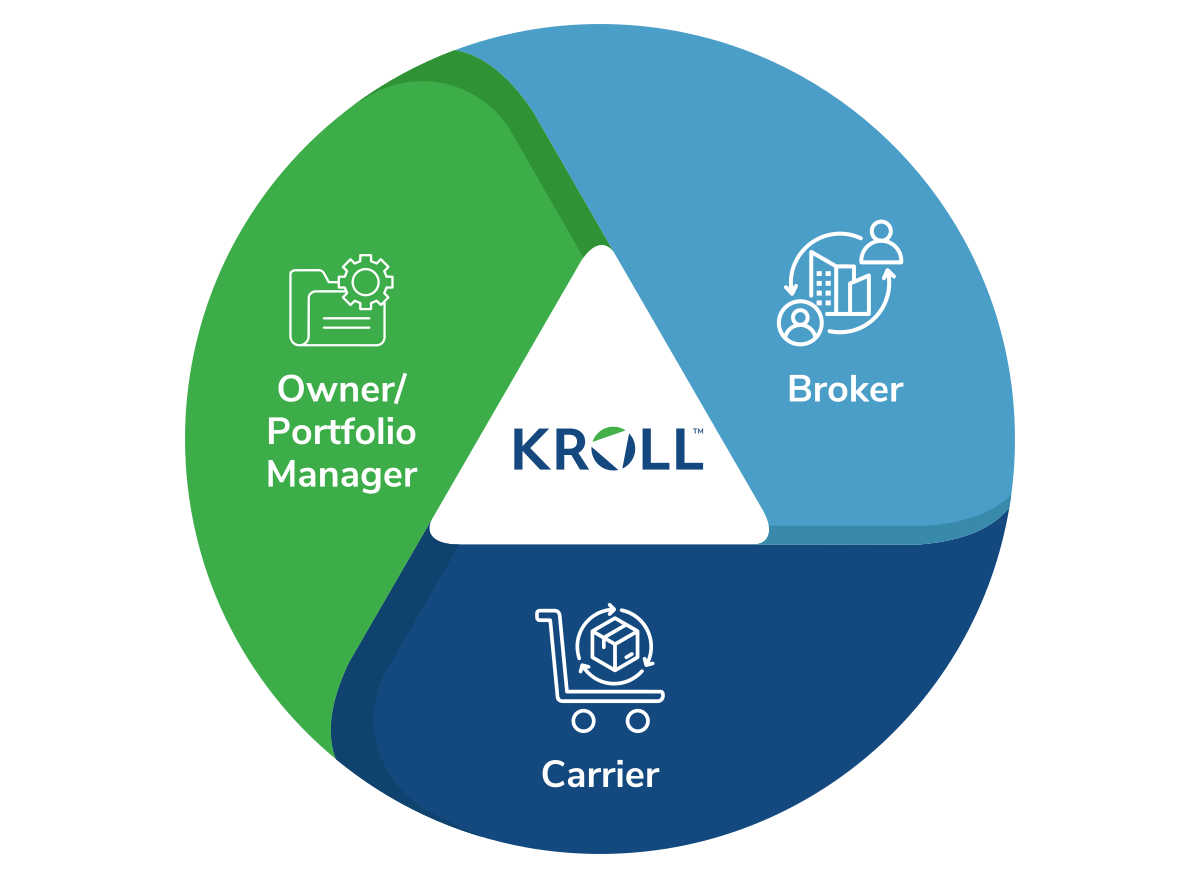
Resilience analysis is most effective when integrated into the broader insurance and risk management process. The impact of mitigation on insurance outcomes depends on alignment, documentation, and timing, not analytics alone.
Effective RoR work typically includes:
- Describing mitigation measures in terms that are relevant to underwriting evaluation
- Aligning modeling outputs with the criteria insurers and risk engineers apply in practice
- Sharing analysis sufficiently in advance of renewal to support informed dialogue
RoR does not replace underwriting judgment or carrier review. Instead, it strengthens the analytical evidence available to brokers and underwriters and supports a more asset-specific assessment of risk quality and insurability.
Resilience with ESG and Risk Governance
Resilience considerations are increasingly incorporated into ESG and risk governance frameworks, particularly in the context of climate risk disclosure and adaptation planning. Targeted mitigation measures can support these reporting and oversight requirements when they are supported by appropriate data and documentation.
However, resilience initiatives are most effective when embedded within an integrated risk management and capital planning framework. They should not be positioned as standalone drivers of ESG ratings or outcomes, but as components of a broader strategy to manage physical risk and strengthen long-term asset stewardship.
From Reactive Measures to Portfolio Discipline
For portfolio owners and managers, the central question is how to evaluate and communicate the impact of resilience in a consistent and financially grounded manner.
Return on Resilience provides a structured framework to do so. It connects the capital deployed to measurable changes in modeled loss exposure and clarifies the potential implications for risk management, insurance dialogue, and asset performance. In doing so, resilience analysis can help organisations evaluate whether capital is being deployed to areas of greatest exposure and where mitigation initiatives may deliver the strongest long-term risk-adjusted returns.
As physical risk continues to influence underwriting, lending, and investment decisions, qualitative narratives around resilience are increasingly insufficient on their own. Decision-makers require quantified exposure analysis to support capital allocation, underwriting discussions, and governance oversight. A disciplined and transparent approach to evaluating mitigation supports clearer communication with stakeholders and more informed long-term decision-making.


Stay Ahead with Kroll
Fixed Asset Advisory Services
Kroll provides clients the transparency they need by identifying, managing and valuing their fixed assets.
Real Estate Advisory Group
Leading provider of real estate valuation and consulting for investments and transactions.