CBUAE Introduces New Remuneration Rules for Banks and Insurance Companies | Kroll

Regulatory Updates

August 4, 2026

CBUAE Introduces New Remuneration Rules for Banks and Insurance Companies

The Central Bank of the UAE (CBUAE) has issued a new Remuneration Regulation (Regulation) for banks and insurance companies, introducing a significantly enhanced governance framework for remuneration across the UAE financial sector.

The Regulation reflects global regulatory trends that seek to strengthen the link between remuneration, risk management and long-term performance. It places greater accountability on boards, introduces prescriptive requirements for variable remuneration and expands disclosure and reporting expectations.

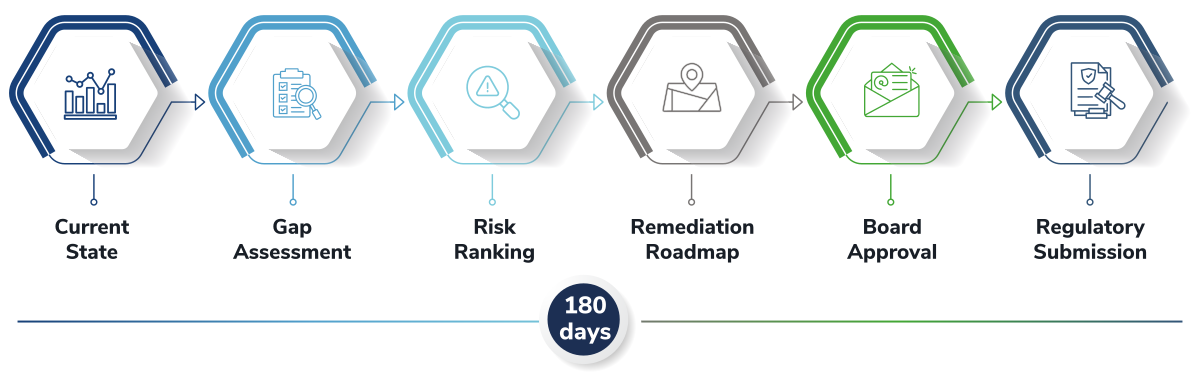
Financial institutions have 180 days, until October 8, to submit a gap assessment and remediation plan to the CBUAE and 15 months thereafter to achieve full compliance.

Table below provides a summary of the changes:

Requirement
New Expectation
Gap assessment
Within 180 days, by 8 October 2026
Full compliance
Within 15 months
Deferred variable pay (MRTs)
Minimum 40% deferred over three years
Deferred variable pay (Senior MRTs)
Minimum 60% deferred over five years
Share-based remuneration
Minimum 50% of variable remuneration
Malus and clawback
Mandatory
Remuneration committee
Mandatory
Annual remuneration review
Required

What Has Changed?

Boards Are Now Directly Accountable

Having a Nominations and Remuneration Board Committee is nothing new, but the Regulation places ultimate responsibility for remuneration governance with the board. Boards are expected to actively oversee remuneration outcomes, ensure alignment with risk appetite and challenge management recommendations where appropriate.

Material Risk Takers Must Be Identified

Financial institutions must formally identify individuals whose decisions materially influence the institution’s risk profile. It is no longer enough to solely rely on Committees – it is personal responsibility that is being brought in.

This extends beyond senior executives and may include underwriters, investment professionals, credit approvers and other key decision-makers.

Variable Pay Must Be Deferred

A significant proportion of variable remuneration must now be deferred over multiple years, creating a stronger link between compensation and long-term outcomes.

  • 40% deferred for Material Risk Takers
  • 60% deferred for Senior Material Risk Takers

Share-Based Compensation Becomes the Norm

At least half of variable remuneration for Material Risk Takers must be delivered through shares, share-linked instruments or equivalent non-cash instruments.

This is intended to reinforce long-term value creation and discourage excessive risk-taking.

Malus and Clawback Move to Centre Stage

Institutions must be able to reduce, cancel or recover remuneration in situations such as:

  • Misconduct
  • Fraud
  • Regulatory breaches
  • Governance failures
  • Excessive risk-taking
  • Poor financial outcomes

For many firms, this will require updates to policies, incentive plans and employment contracts.

Risk, Compliance and Internal Audit Must Remain Independent

The Regulation introduces enhanced protections for control functions, requiring remuneration arrangements that support independence and objectivity and avoid conflicts with business performance incentives.

Islamic Financial Institutions Face Additional Requirements

Specific remuneration rules now apply to Internal Shari'ah Supervision Committees (ISSCs), reinforcing independence and reducing potential conflicts of interest.

Disclosure Expectations Increase Significantly

The Regulation introduces extensive disclosure and regulatory reporting requirements covering:

  • Remuneration governance
  • Variable remuneration arrangements
  • Deferred compensation
  • Material Risk Takers
  • Malus and clawback outcomes
  • Senior employee remuneration

How to Approach the Gap Assessment?

This is one of the few instances in which the task must be led jointly by HR and compliance professionals. It is neither purely a compliance and regulatory exercise nor solely an HR initiative.

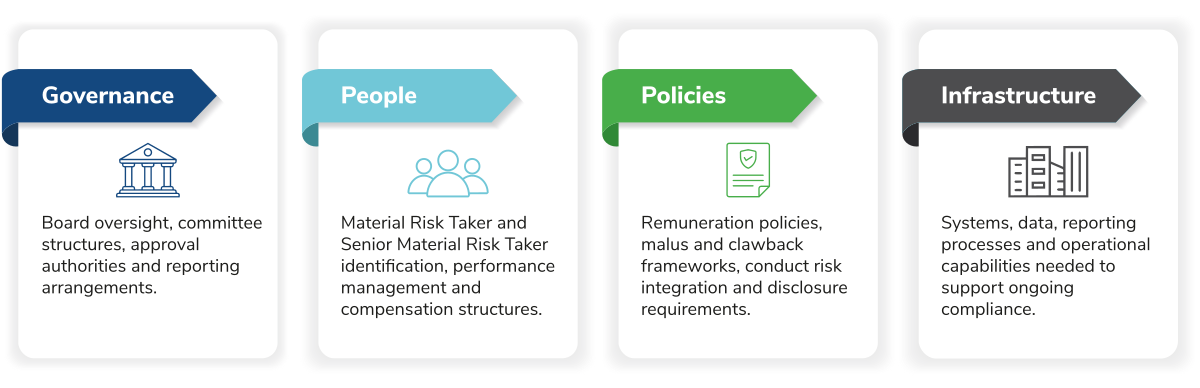
A robust assessment should evaluate four key areas:

CBUAE Introduces New Remuneration Rules for Banks and Insurance Companies | Kroll 

In summary, the workflow below shows the steps to be taken to complete the initial gap assessment for submission to Central Bank, and the subsequent implementation.

CBUAE Introduces New Remuneration Rules for Banks and Insurance Companies | Kroll

The Process for Implementation

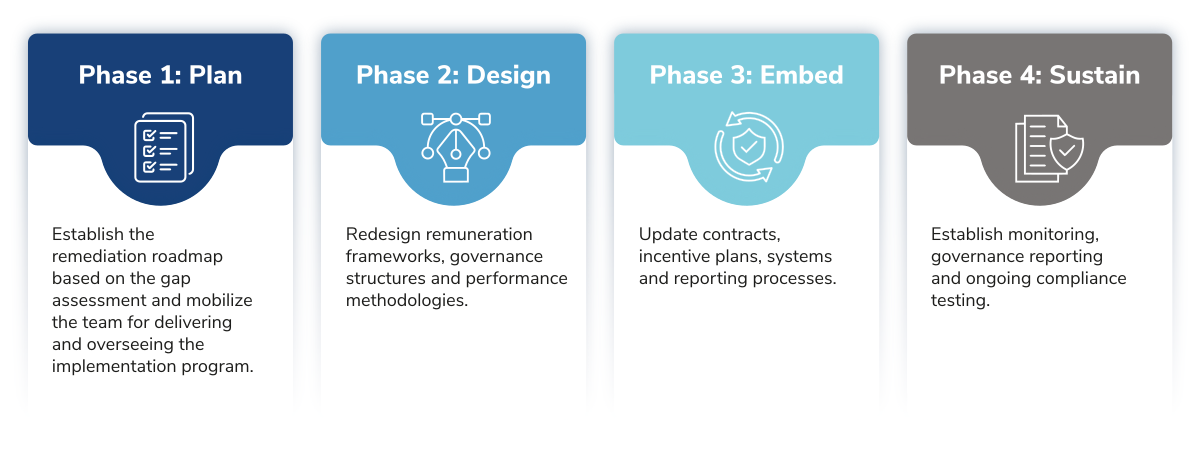
If there is one key message, it is: Do not underestimate the time required for implementation. While 15 months may seem like a long time, but even the most straight forward program can take significant time, especially if the aim is to achieve ‘embeddedness’ across the organization.

The new Remuneration Regulation needs more of a transformation program than a pure regulatory remediation – as such we would look at the following key milestone:

CBUAE Introduces New Remuneration Rules for Banks and Insurance Companies | Kroll

How Kroll Can Help

Kroll supports financial institutions in navigating complex regulatory changes across governance, risk and remuneration.

Our specialists can assist with gap assessment and support your team with the implementation, including the design of policies and procedures, training of your internal teams for the ongoing requirements and independent assurance that the framework meets the regulatory requirements.

Stay Ahead with Kroll

Financial Services Compliance and Regulation

In the ever-evolving financial services landscape, Kroll's award-winning team offers comprehensive regulatory and compliance services, guiding clients through registration, licensing, and compliance support to minimize risks and enhance efficiency globally.

Middle East Solutions

Kroll’s Financial Services Compliance and Regulation experts help clients build, manage and protect their businesses both in the United Arab Emirates and more broadly in the Middle East.

Operational Resilience

Operational resilience is a priority for UAE regulators, who are actively developing frameworks to ensure financial institutions can withstand disruptions and continue delivering critical services.

Corporate Governance Solutions

Corporate governance refers to the system of structures, policies and processes through which a Licensed Financial Institution is directed and controlled.