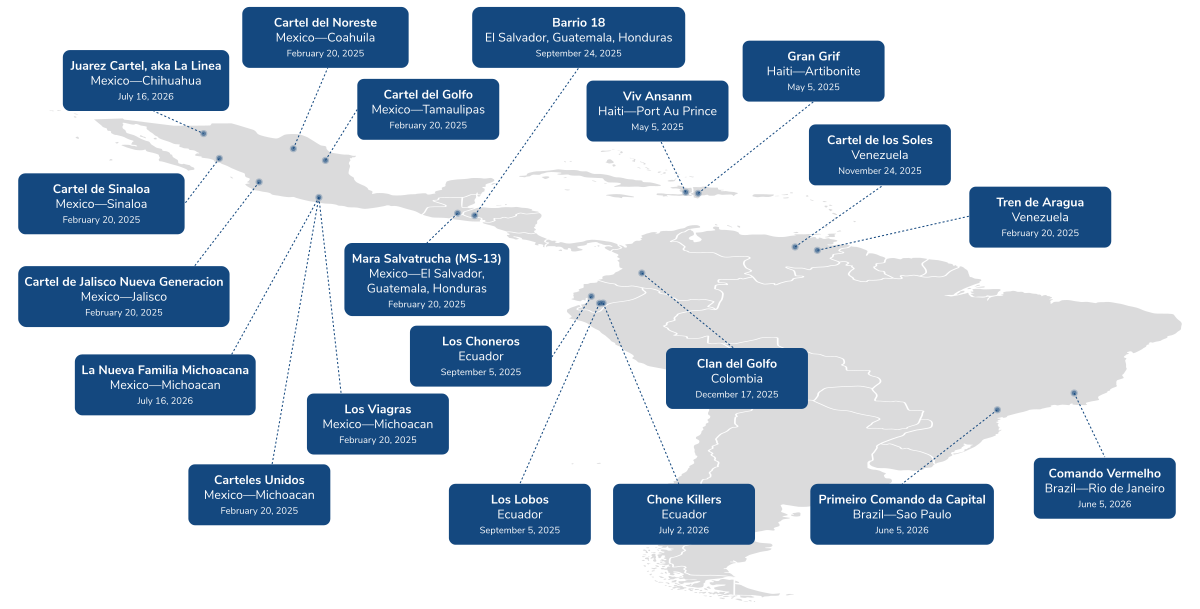

When the U.S. designated two criminal organizations in Brazil as Foreign Terrorist Organizations (FTOs) in June 2026, it reignited concerns around the implication of the 2025 executive order that enables the U.S. to designate cartels and transnational organizations as FTOs and, derivatively, as Specially Designated Global Terrorists (SDGTs).
Concerns stem not from the classification itself—one can argue newly classified organizations are terroristic in nature—but how the U.S. will treat corporations using the broad-brush “material support” definition that can trigger enforcement.
Eight cartels were designated as FTOs in early 2025—six Mexican cartels and two transnational organizations—with the list eventually expanding to 20 across Latin America; Los Viagras and the Juarez Cartel became the latest additions in July.
The designations have increased the importance of compliance programs, with even modest infractions, such as having a third-party distributor paying a cartel fee to transport goods through a controlled area, potentially triggering civil and criminal liability under U.S. law. Entire supply chains are vulnerable; it is no longer enough for organizations to ensure they cut direct ties to criminal organizations.
In Brazil, companies are now grappling with this reality as two wide-spanning criminal organizations, Comando Vermelho (CV) and Primeiro Comando da Capital (PCC), were designated as FTOs in June 2026. Following the designation, the U.S. Department of Treasury sanctioned three Brazilian companies, one Portuguese company and two Brazilian nationals for their connection to PCC.
Cartels and criminal organizations are deeply embedded in Latin American infrastructure, especially Mexico. Assessing exposure and minimizing risk of enforcement is challenging, and in some cases nearly impossible. The complexity of potential FTO-related enforcement adds to the already difficult secondary sanctions risks faced by Latin American financial institutions and businesses, and there is no one-size-fits-all solution. Many companies are still evaluating how to manage these risks, whether they emanate from direct counterparty relationships or indirect exposure.
Criminal Organizations Designated as FTOs Under Executive Order 14157